
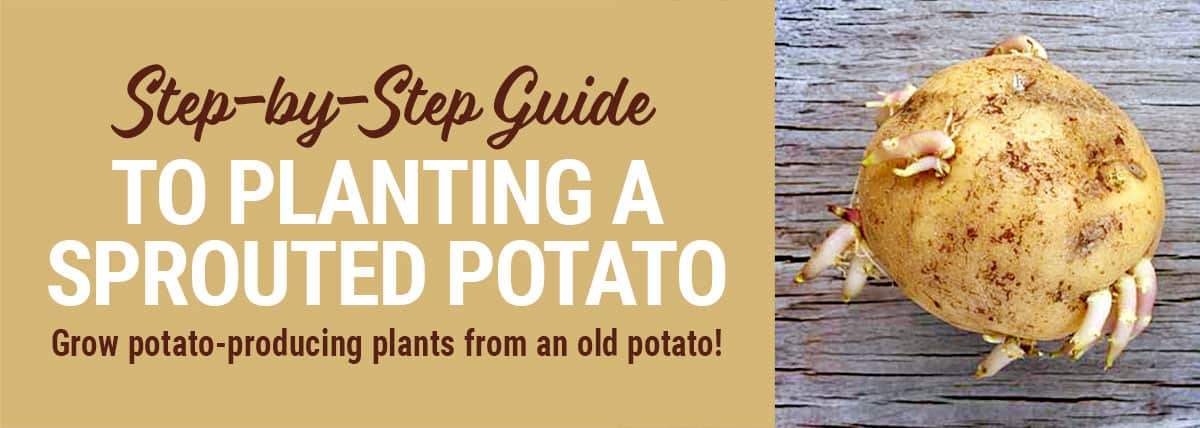
Did you discover the potatoes you bought from the grocery store awhile back, and forgot about, have suddenly sprouted in the depths of your pantry?
What should you do? Toss them out? No way! They're still good! You can actually plant those sprouted potatoes to regrow new potatoes and I'm going to tell you how to do it.
Yes, you can re-grow sprouted potatoes!
You can plant a sprouted potato and grow more potatoes. But there are a few things you should know.
You will actually get several potato plants and ultimately a bunch of new potatoes from just one sprouted potato if you do it right. It's not difficult, but there are a few tips and tricks to being able to grow a successful potato-producing plant, from an old potato that has sprouted.
★ Steps to Plant a Sprouted Potato ★
You can plant any kind of sprouted potato from sweet potatoes to yellow or white potatoes.
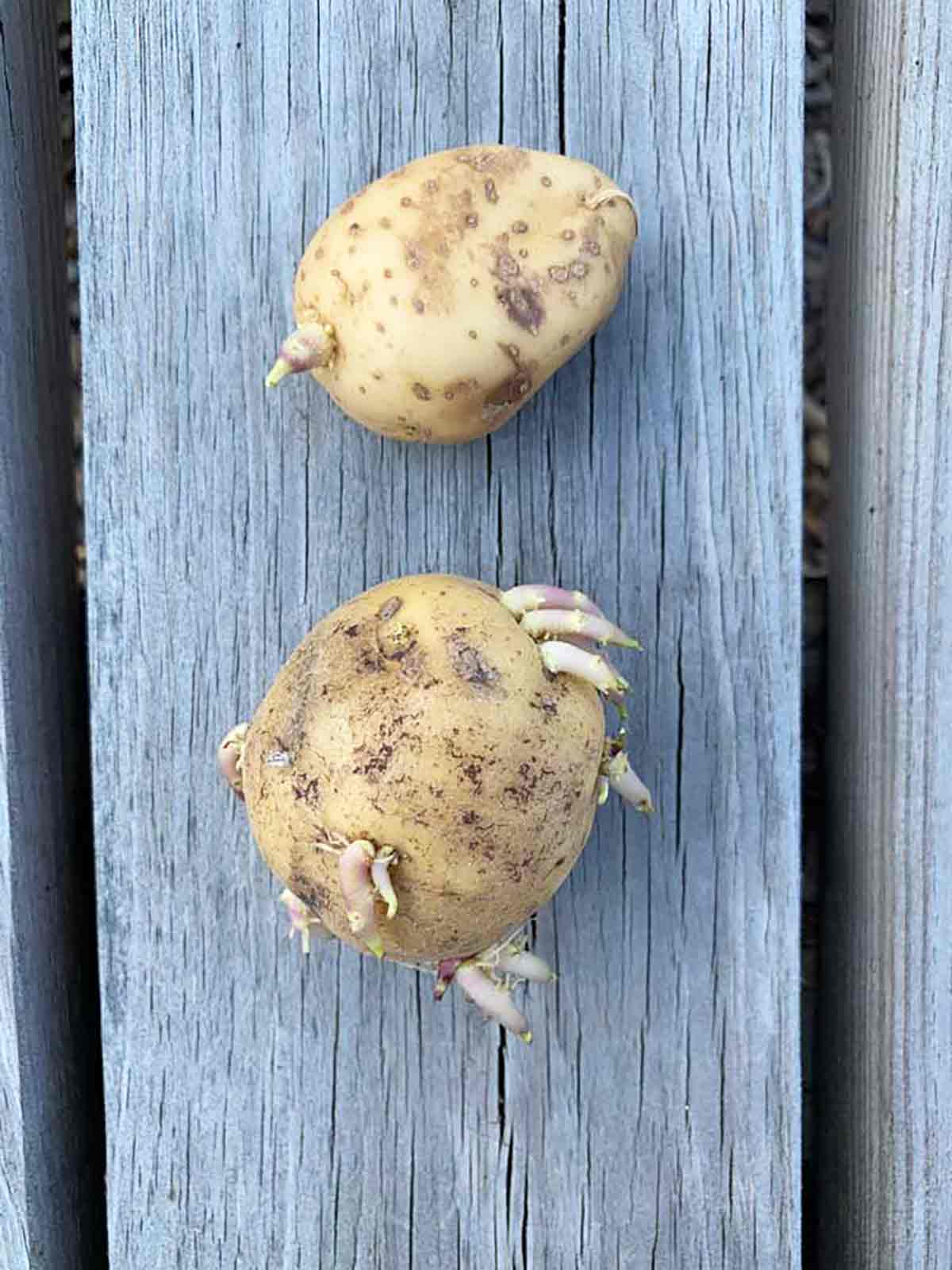
Here's how.
First, don't plant the whole potato in the ground. You'll need to do a little bit of prep to get your sprouted potatoes ready for planting for best results. Don't worry, it's easy. You don't need to be a gardening expert to pull off growing potato plants. Just follow these steps...
Step 1: Prep your garden bed by mounding soil into rows.
You'll want to plant your potato sprouts within 2-3 days of preparing them so it's best to get your garden bed ready to go, first.
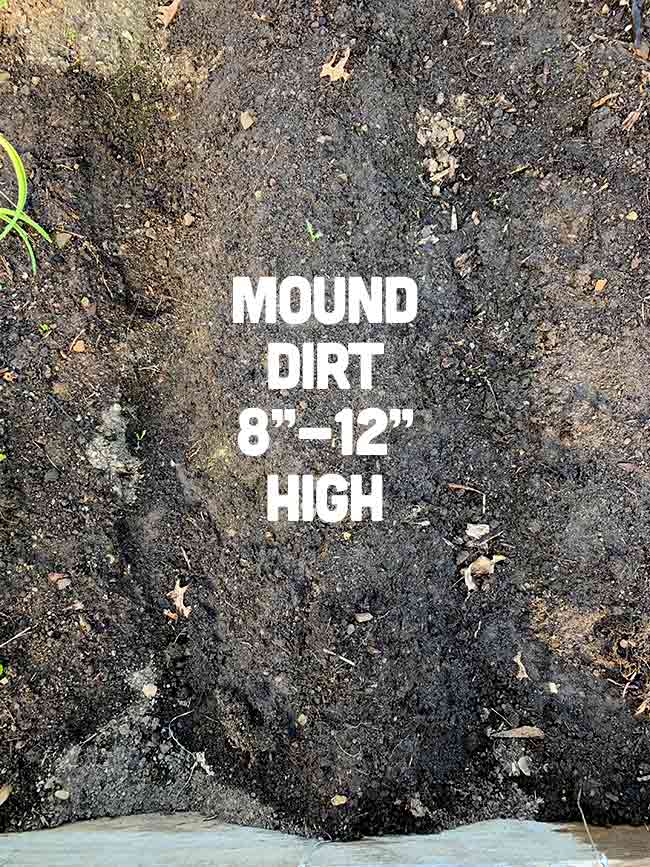
Potato plants grow best when you mound the dirt. This is because potatoes grow underneath the soil. The leaves of the potato plant grow above ground but the roots and potatoes will all develop underground. So the bigger the mound of dirt you create, the more room the potatoes will have to grow.
You can easily mound the soil in your garden by scooping the dirt on either side of the row you create and piling the dirt up in the middle. You want the soil to mound between 8" and 12" tall.
I don't use a special tool for this other than gloves. I just mound the soil with my hands. For larger gardens, you can use a shovel, gardening hoe or rake.
Rows should be about 1 foot apart.
Step 2: Count your potato sprouts.
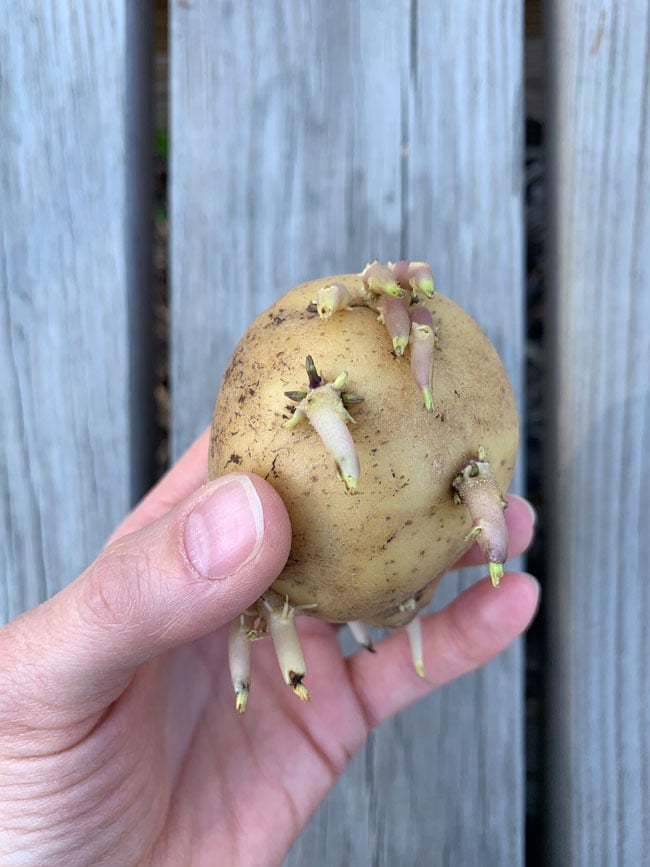
The number of plants you'll be able to get from each potato will depend on how many sprouts the potato has.
A potato sprouts from the eyes on the potato. Each sprouted eye can be cut and grown into a plant. If an eye has multiple sprouts, go ahead and leave those grouped together when you make your cuts.
Each sprouted potato will offer a different number of sprouts.
Step 3: Cut away each sprouted eye.
Using a serrated kitchen knife, cut potato into several pieces, each piece should have one sprout. Each of these pieces can be planted and will grow a potato plant!
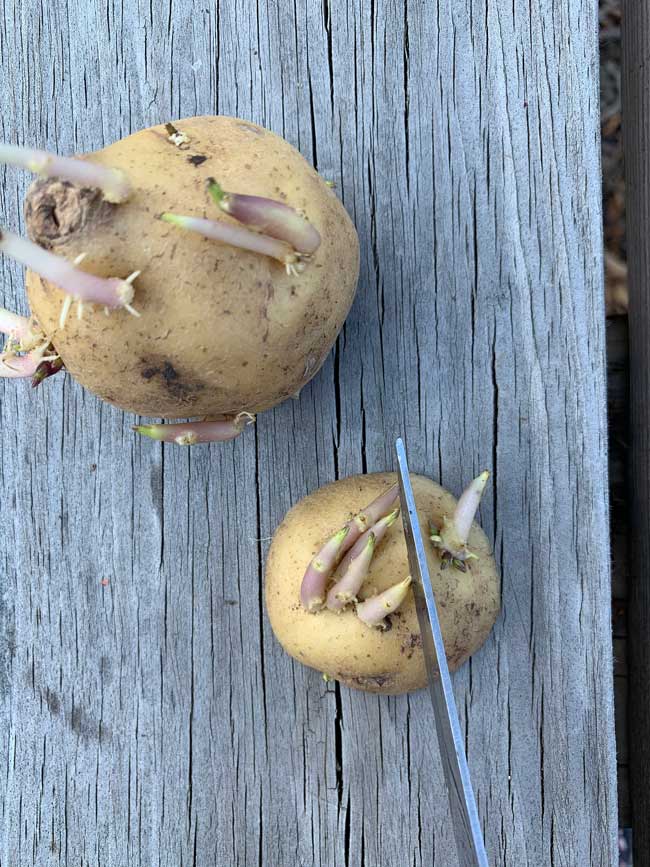
Step 4: Plant your potato sprouts.
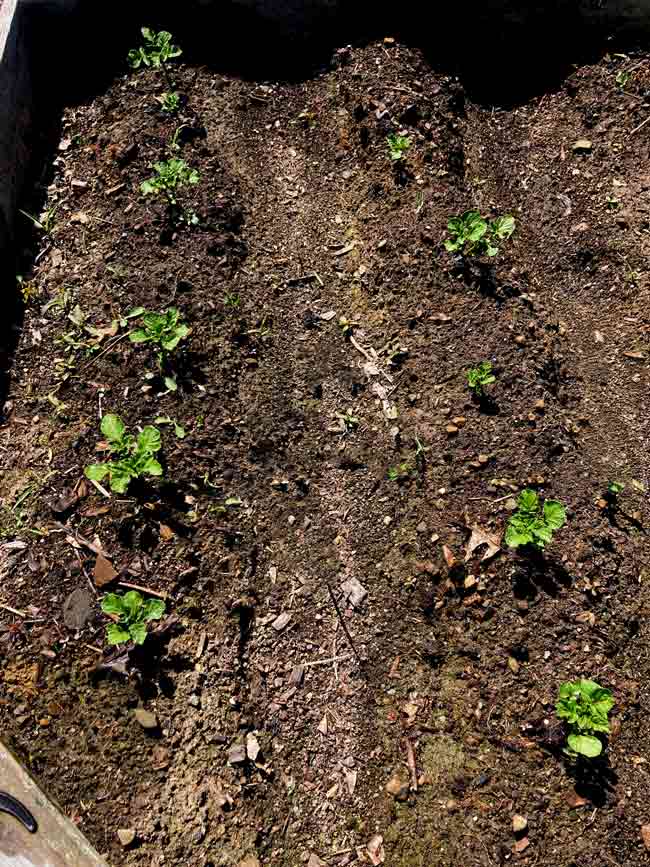
You'll want to plant your potato sprouts within 2-3 days of cutting. Ideally, you will want the skin to dry enough to seal out disease but not too much so that the sprouted parts dry up. You do not need to store the sprouts in water or soak them before planting. Do store them in a cool, dry place after cutting.
Separate the sprouts by cutting away each sprout or group of sprouts, leaving a small amount of potato attached to the sprout.
Potato sprouts should be planted cut-side down, sprout-side facing up. You'll want to plant each sprout 3-4" below the surface of the soil. Plants should be spaced out at least 12" apart so the plants have room to grow both below and above ground.
Planted potato sprouts will take about a weeks to push through the soil and open up their leaves. Keep the plants watered and make sure they get plenty of sun.
What time of year should I plant my potato sprouts?
When you plant, depends on where you live. Generally, early spring is when you will want to plant. You will need to make sure the ground temperature does not drop below 40°F (5°C). Generally the ground is warm enough 2-4 weeks before the last frost of the spring.
Note: Potato plants grow best in soil with a temperature of 45-50°F (8-10˚C). However, can grow in warmer conditions as well.
You can start your potato plants indoors for before transplanting to the ground if the soil temperature is still too cold.
Step 5: Water and weed around your potato plants.
Fertilize your soil if its not very rich. Check out this guide for fertilizing your soil if needed.
Mound the soil. As the plants grow, you can continue to mound soil around the base of the plant.
In general, potatoes need about 3 months to grow and produce a harvest. Some varieties may require more or less time.
Step 6: Harvest your potatoes.
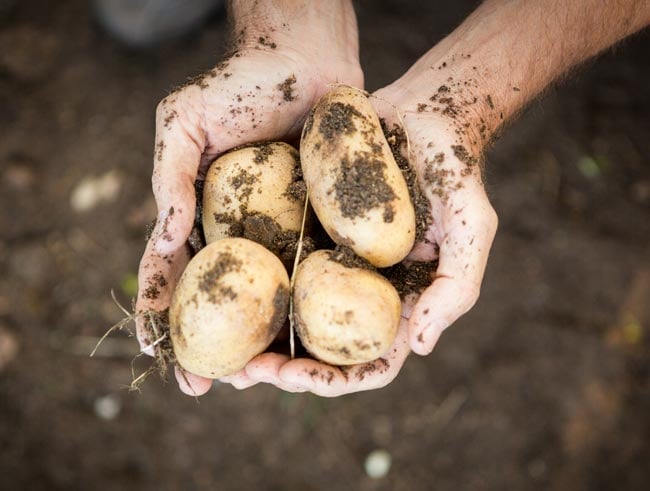
Since the potatoes grow underground, its tricky to tell what you'll get in terms of size or number of potatoes. However, you'll known that your potato plants are ready to be harvested when the visible plant dies off either after the first frost or on its own, usually in the fall.
Then for the fun part! Harvesting potatoes is like digging for treasure. Grab a garden fork and/or some garden gloves if you want to use your hands and dig in! Sift throw the mounded dirt until you find your potatoes. You'll likely get a variety of sizes.
Do not wash your harvested potatoes. You want to keep potatoes dry to avoid rot. To clean off the dirt, use a dry, soft vegetable brush. Store them in a cool dry place. Potatoes can usually be stored for up to 6 weeks or more.
If your potatoes begin to sprout before you get to use them... well, now you know what to do! Use that sprouted potato to grow more potatoes!
★ Tips & FAQs ★
The best potato growing season is spring through summer with a fall harvest but that can vary depending on where you live.
Potatoes grow best in cooler climates with at least 6 hours of sunlight a day. Potatoes will not typically survive temperatures less than 40˚F. Too warm isn't good either though. Soil temperatures warmer than 80˚F may fail to produce to potatoes.
If you're not in a location where temperatures are warm enough to plant your sprouted potatoes, you can store them.
To store them, you want to put them in a location that is between 35-40˚F. A cool, dark and dry place is key. Your refrigerator or a cold basement would work. These conditions will force them to go dormant until you're ready to plant.
When you are ready to re-activate them, move them to a warm location. It's OK if they have become dry and wrinkled as long as they are not mushy and rotten (if they smell bad they are rotting). Some light and a little moisture can help them sprout again.
You do not want to freeze them or leave them outside if temps drop below 35 or go above 50˚ at any point in time. The ideal temperature range should remain between 35-40˚ Refrigerators are typically 40˚.
★ Recipes to Try ★
Now let's make some food!
While you're here, check out my easy recipes to get ideas for what to make with your garden-fresh potatoes!
Browse all my easy potato recipes.




Bonnie says
Can you put straw around for the mound
Angela G. says
Hi Bonnie, you will want to build mounds using soil.
Bill says
I have about ten potatoes that got to old for me to eat. can I just plant the whole thing? Eyes will be going all directions.
Angela G. says
Hi Bill, no do not just plant the whole potato. You should read the above post and follow the steps.
Marilyn says
@Bill, As it says in the article, trim leaving a small amount of potato around each sprout and plant sprout up.
Brian says
Straight forward no nonsense advice. Easy to follow and understand.
Helen says
HI! I bought seedling potatoes at the end of february and kept them in a dark cool place. They already sprouted about 8" straight flutes! Am i still ok to plant them? Any suggestions on how I can plant them into containers or buckets?
Thank you so much!
Angela G. says
Hi Helen, as long as the sprouts have green leaves you should be good to go ahead and plant them! Since they are tall you can plant them and then mound some dirt around them a bit to prop them up. If you’re planning to put them in a container you’ll need to make sure the container is very large so there’s enough room for the potatoes to grow under the soil. The plant also gets pretty big. The pot needs to be well drained (I put a layer of rocks at the bottom of the pot then fit with soil) and the plant needs to be in full sun. Hope this helps! Good luck!!
Helen says
@Angela G.,
It definitely helps! Thank you so much!
Helen says
@Helen, one more question ☺️ The container I have is a very large rectangle. Is it ok to mix 2/3 different potato varieties in the same container? Or should they be planted separately? I think I have 5 red, 5 white and one sweet potato
Angela G. says
Yes, you can grow different potato varieties in the same container, but it’s best if they have similar maturity times so harvest isn’t tricky. Just be sure the container is large enough to prevent crowding. White and sweet potatoes take a little longer to be ready to harvest. So you may want to plant those separately or off to one side.
Helen says
@Angela G.,
one more question ☺️ The container I have is a very large rectangle. Is it ok to mix 2/3 different potato varieties in the same container? Or should they be planted separately? I think I have 5 red, 5 white and one sweet potato
Angela G. says
Hi Helen, potatoes are predominantly self-pollinating so you shouldn’t have any problems planting different varieties together.
Bongi says
@Helen, where did you buy the seedlings..I have been searching
Angela L says
Thank you so much for the tips on regrouping both onions and potatoes! It will be my first attempt, excited!
Katherine says
Thank you for these tips. This is my first attempt with potatoes. I'm in a supposedly semi-tropical environment but we do get winter and we are going into what promises to be a mild fall and winter. Even though you said to plant in spring, I am going to experiment and see if they will grow now, in early fall.
Angela G. says
Experimenting is fun! Let’s us know how it works for you!
Liz says
Can you plant potatoes in a 5 gallon bucket?
Angela G. says
Hi Liz, Yes you can. Make sure the bucket is well drained and is placed in a very sunny spot. Using fertilized soil will help. You can follow all the same instructions for planting and mounding as you would if planting in the ground. Good luck!
Maya says
Can you grow sweet potatoes using the same method (of cutting around the eye/sprouts, waiting a day or two for the cut to dry and planting directly into soil)?? I have read and seen videos of creating slips and such and it seems to much more time consuming.. just trying to figure out what can be done with a sprouted sweet potato? And whats truly needed?? TY
Angela G. says
Hi Maya, yes this process works with any potato including sweet potatoes. I have noticed that sprouted sweet potatoes tend to dry out a little quicker. So you want to make sure you put them in the ground when the sprouts still look fresh. These are the steps I’ve used for several years to grow potato plants with my kids in our garden. They love digging for potatoes at the end of the season! Good luck!
Amanda says
Hi! I have a few russets that have sprouted, but the problem is that it’s winter here in Colorado. Any problems planting them indoors by a sunny window?
Angela G. says
Hi Amanda, I haven't tried to grow them indoors but according to this farming site, you can. Interestingly potatoes are self-pollinators so you don't need to depend on wind or bees or a male/female plant relationship which helps the success of growing them indoors. Check out this link to get tips for growing indoors including sunlight, potting, etc: https://whyfarmit.com/grow-potatoes-indoors/ Good luck!
Jb says
Thanks for the seems to be easy info on planting
Marie says
I love this article help me to get ready .so is it OK to plant them now since the cold weather is comming ,I live in fla..should they be planted away from other plant like roses . Thank you marie
Angela G. says
Hi Marie, I'm so glad this information helped you! Potatoes need at least 6 hours of sunlight a day and will not typically survive temps less than 40˚F and soil temperatures warmer than 80˚F may fail to produce to potatoes. Potatoes do need quite a bit of room to grow above and below ground, so I would make sure not to plant them within 2 feet of any other plant. Here's a list of other things not to plant near potatoes that may be helpful: https://www.kellogggarden.com/blog/gardening/potato-companion-plants/
Tammy says
What a great article. I have a small container vegetable garden on my apartment patio. I planted some red potatoes from a couple of store bought ones that started to sprout. They did great for a while. But being that I knew absolutely nothing about gardening in the first place, it started dying. I was going to just wait until next spring to start over again. Then my little potato plant started sprouting again. There's just a little leafy sprig right now. But I'm going to try to save it and get it through this winter. I've got some russet that need planting. This article really helped with my questions. Maybe by next spring I'll have some potatoes and other vegetables. Since this was my first time, I wasn't looking for much success. I was going through the trial and error stage. I did get a few Jalapeños, green onions and VERY tiny tomatoes...not enough to be relevant, but I'm getting there. Articles like this are very helpful. Thanks a bunch!
Angela G. says
Hi Tammy, So glad you found this info helpful! Gardening is half skill half luck, I'd say. I hope your potato does OK through the winter. Definitely put it in a sunny spot if you can.
Evans says
Very interesting
Meredith says
Why does every other search give complex "instructions" to simple questions.
I thank-you for an honest and informative site! Now I get the information I require for such a simple and joyful experience as growing a simple spud to eat.
Regards and thanks, Merra.
Angela G. says
Glad you found this helpful, Merra. Good luck with planting your potatoes!
Rosemary says
@Meredith, I just had to reply to say how much I agree with you.
This is the third page I have just read and it was a joy to read it. I know it's only the beginning of January but I still went to look for sprouting potatoes.
Moksha Essentials says
Thank you for sharing that detail. It was fascinating and insightful. Continue to share useful resources over these blogs...