




Skim by Section
★ Why You'll Love this Recipe ★
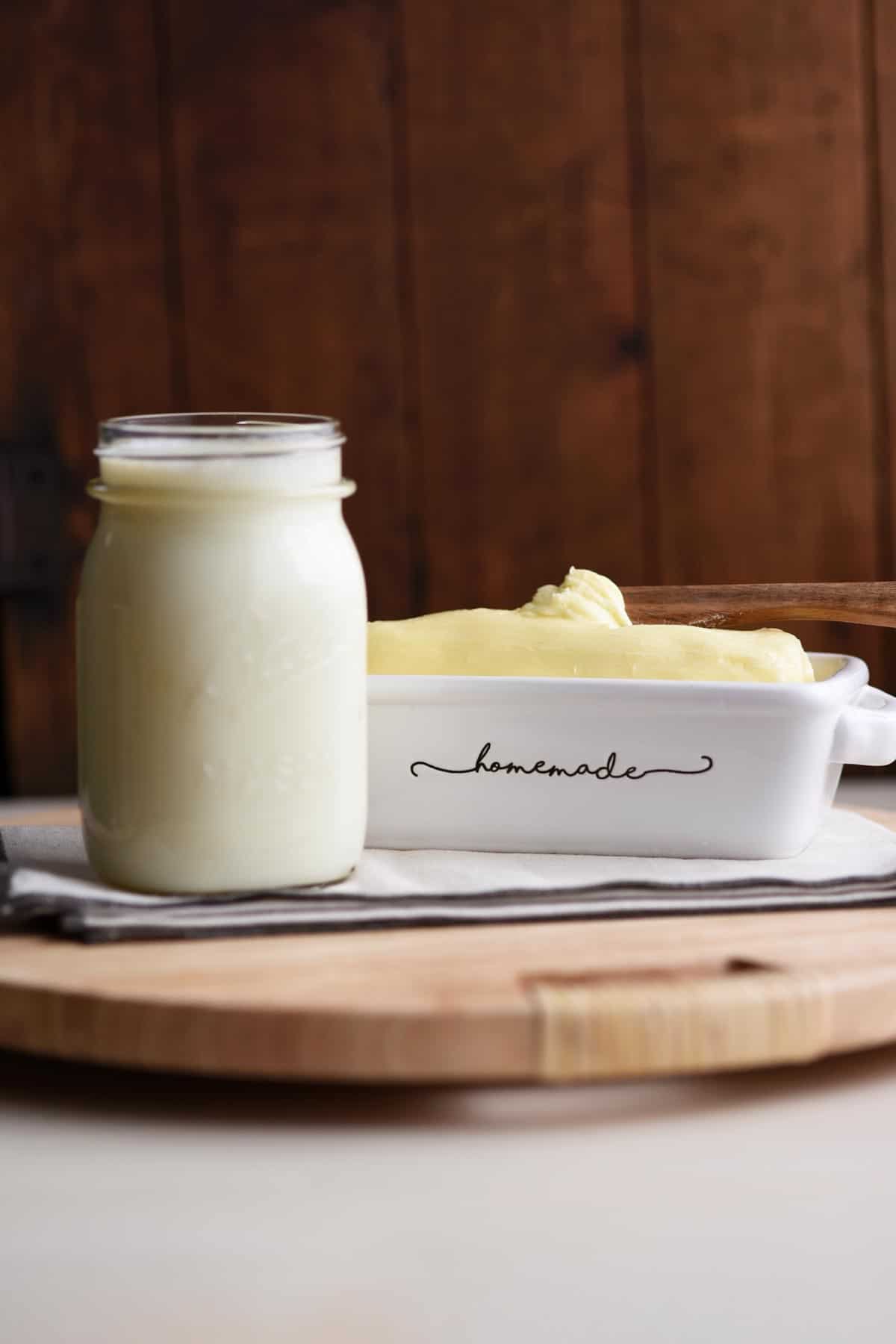
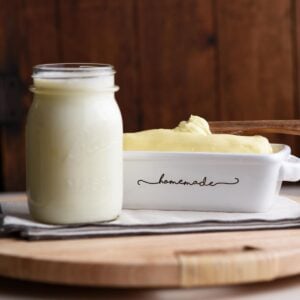
This is a two-for-one deal. You can make homemade butter and you will get buttermilk as a byproduct. All starting with heavy cream.
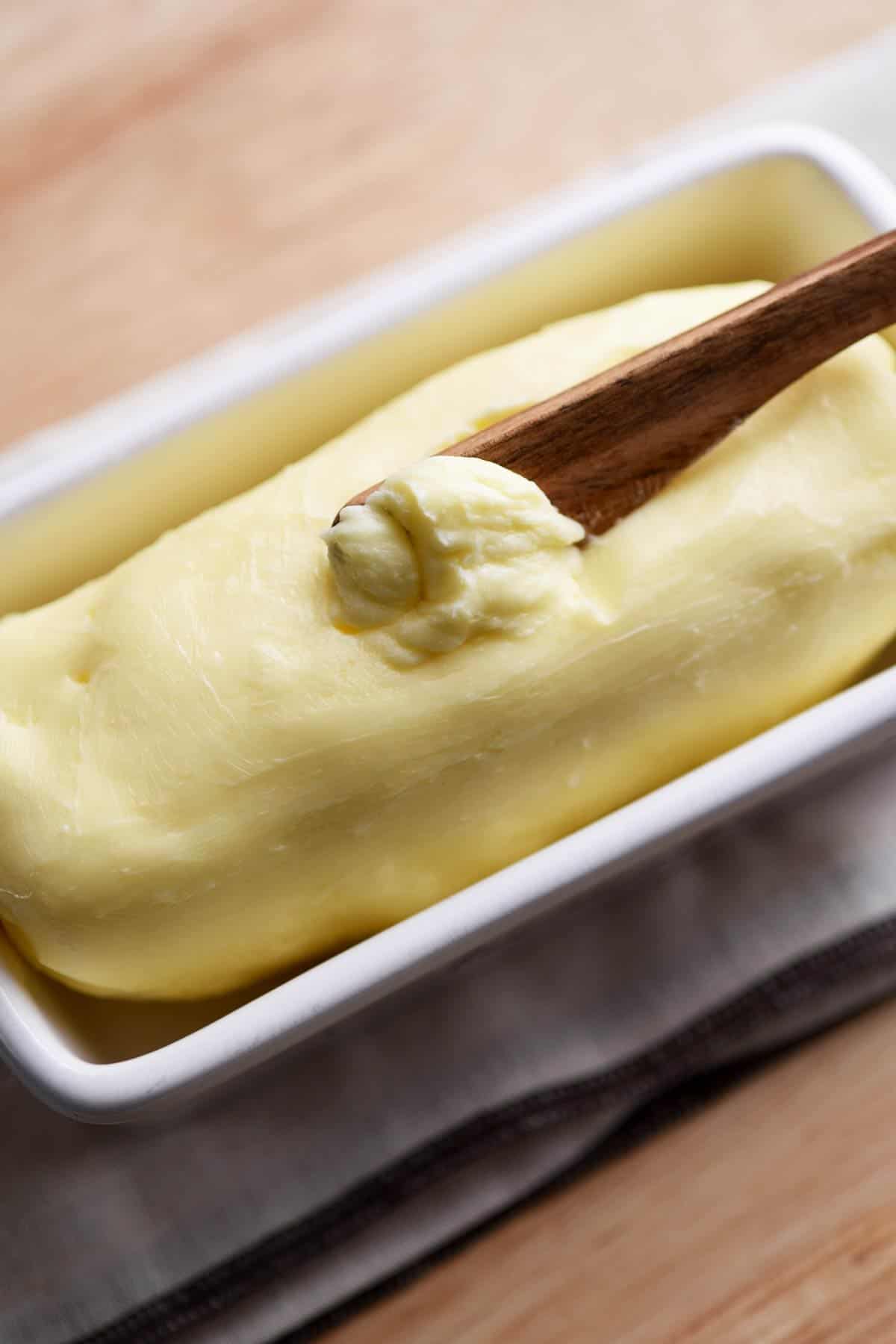
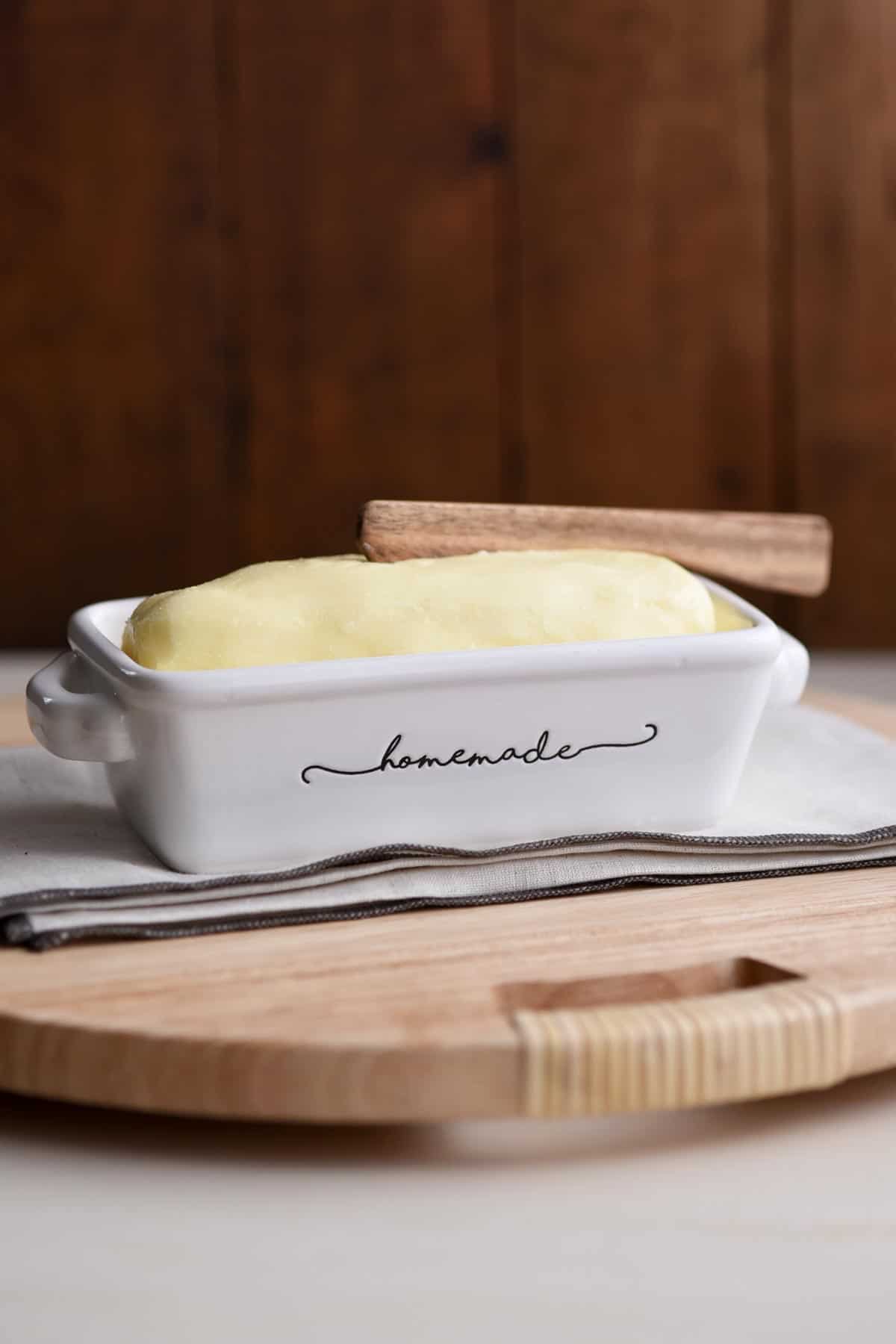
Homemade butter takes just 15 minutes.
Making your own butter is easier than you might think. You'll need a food process and some cheesecloth. The whole process takes about 15 minutes.
Homemade Butter is Freezer Friendly
Butter is freezer-friendly so you can make a big batch and store it in small portions. Thaw as you use it.
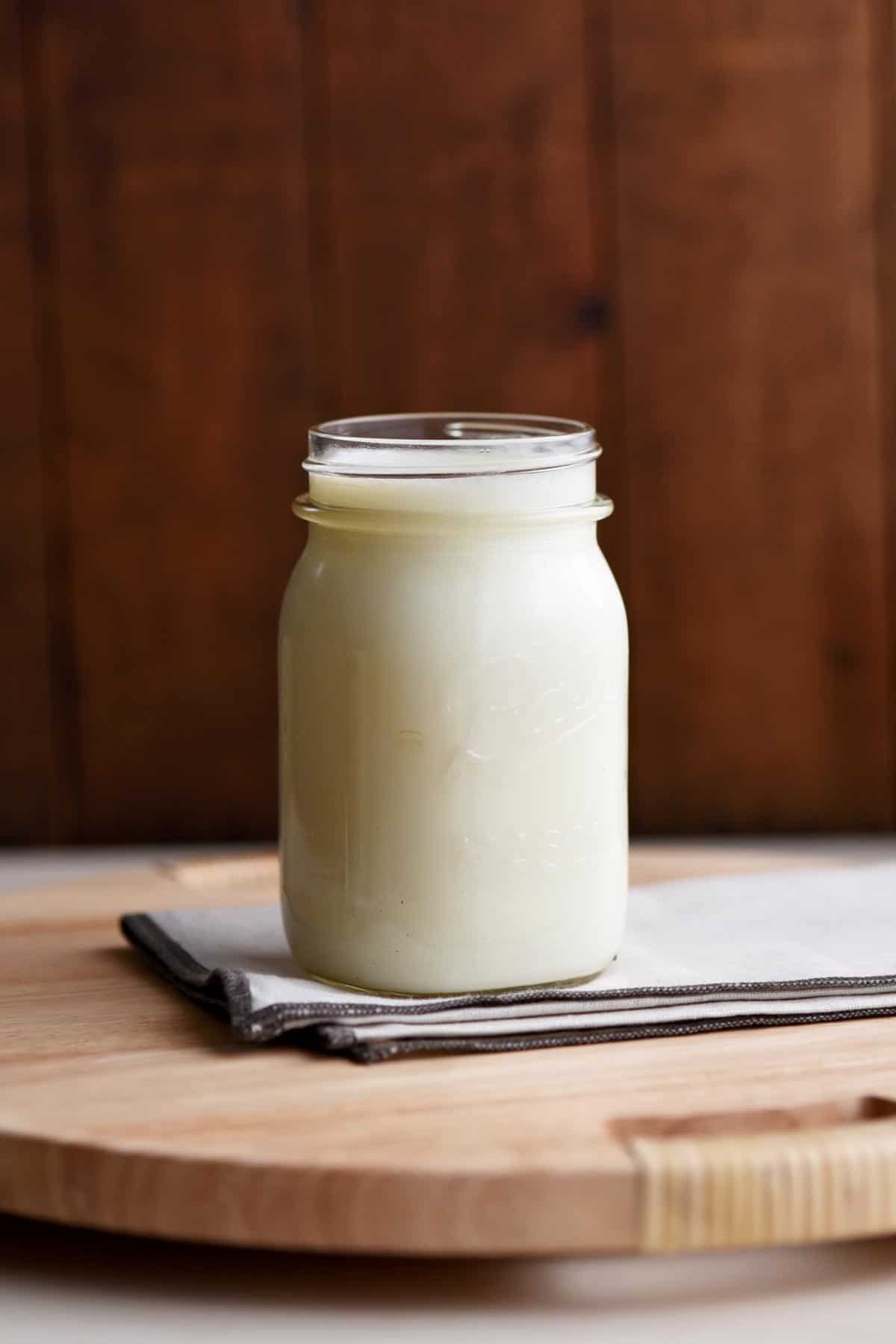
Buttermilk is the byproduct of making butter.
The process of making butter naturally produces buttermilk. So don't just toss it. You can save the buttermilk to make delicious pancake or use it to tenderize chicken.
You will need to culture your buttermilk to get that tangy buttermilk flavor. Culturing buttermilk is as simple as adding culture starter and waiting for the cultures to activate.
You can also use the buttermilk byproduct as-is, without culturing it. It will taste more like watery milk but can still be used in recipes or just as you would use milk.
★ Ingredients You'll Need ★
To make homemade butter, all you need is heavy whipping cream and salt.
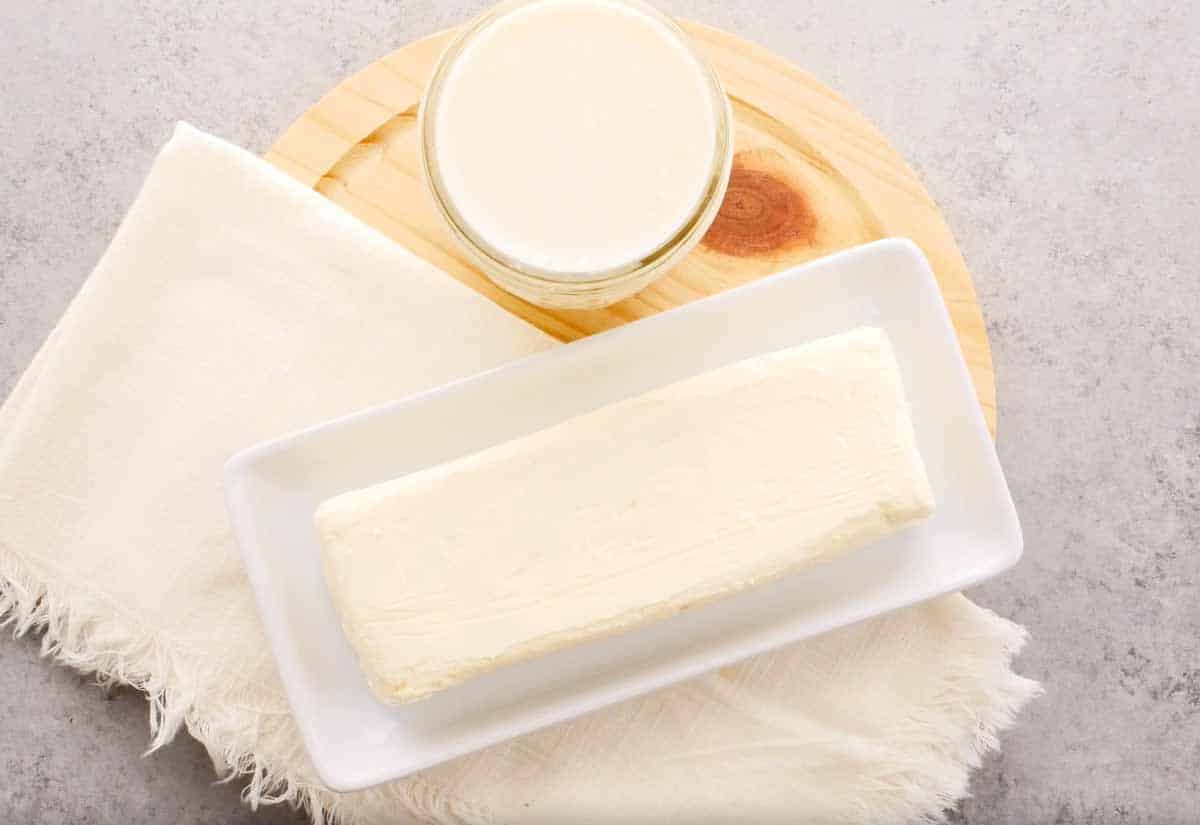
The byproduct of making butter is buttermilk. If you want to culture your buttermilk, you'll need to buy buttermilk culture starter.
★ How to Make Butter ★
Here's a look at the steps.
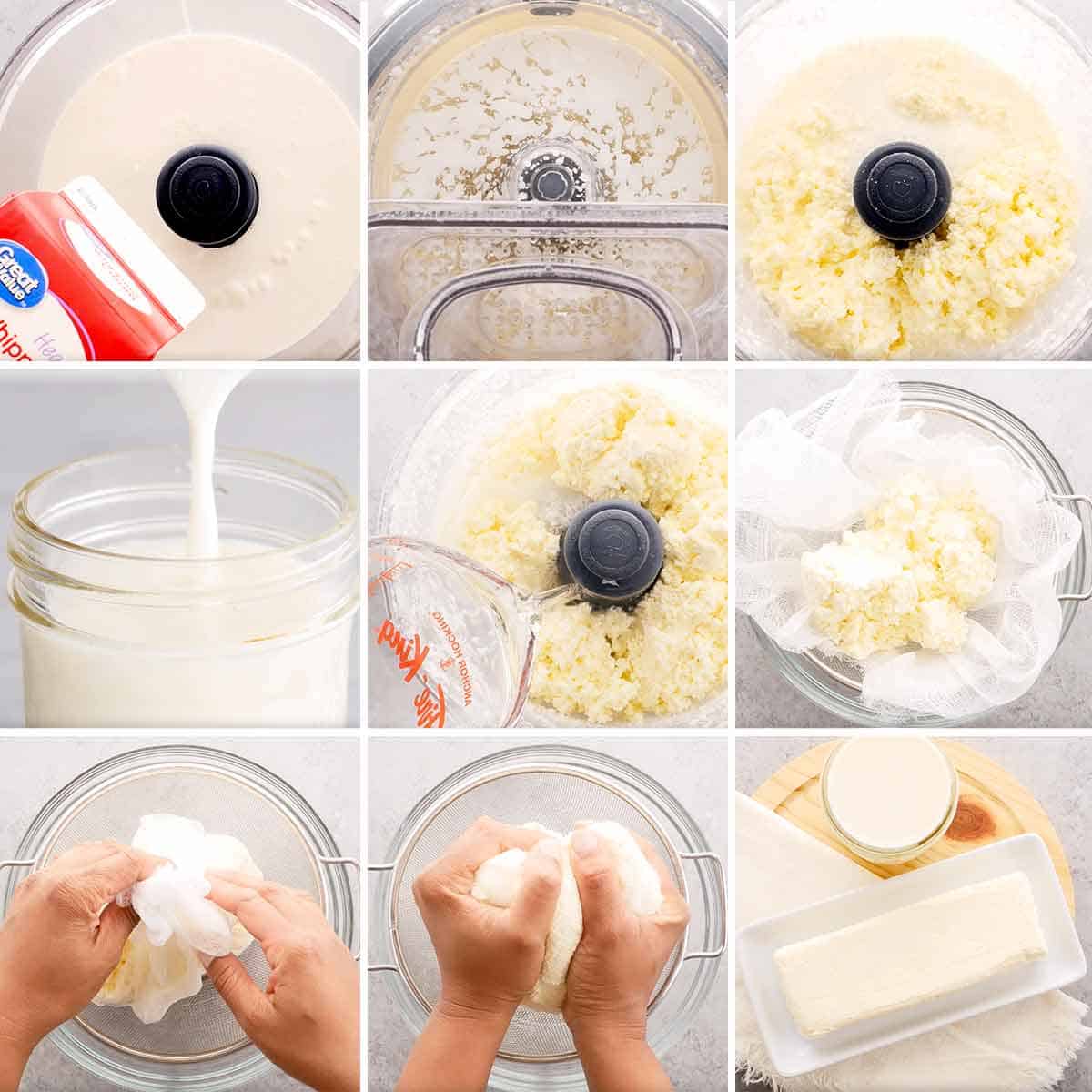
- Add heavy cream to food processor.
- Blend until the fat separates from the liquid.
- Pour off the buttermilk and save it to be cultured. (more info below).
- Rinse the butter fat by adding cold water and blending again.
- Pour away the milky water. Repeat until water comes clean.
Note: This step removes excess liquid that can lead to your butter spoiling. Your goal is to be left with just the fat of the milk. The fat will not spoil even if left out at room temperature but if any milk is left in the fat, that can spoil and cause your butter to be rancid. - Mix in salt to taste. You can use table salt or sea salt. You can also blend in herbs if you want flavored butter.
- Gather butter and wrap in cheesecloth.
- Squeeze to remove liquid.
- Shape your butter into a stick and chill to set if desired.
★ How to Culture Buttermilk ★
Buttermilk is the byproduct of making butter. However, if you're using pasturized heavy cream to start, then your buttermilk will not be cultured.
Everything sold in stores is going to be pasturized for safety reasons. This process kills harmful bacteria but it also kills the cultures that can be good for adding flavor and probiotics. The good news is, it's easy to add that good bacteria back into your buttermilk.
How to Re-culture Buttermilk
Culturing Buttermilk Using Culture Starter
To add cultures, you can purchase culture starters or add plain Kefir to your buttermilk which contains live cultures.
Culturing Buttermilk Using Kefir
If using Kefir, add 1 tablespoon to your buttermilk. Cover loosely to keep out dust but to allow airflow and place in a warm spot (70°-77°F is ideal) for 12-24 hours. Once the buttermilk becomes thick, use it or refrigerate for up to 2 weeks.
Note: Using live cultures involves the risk of consuming bacteria. If your buttermilk has a foul smell, it's likely gone bad and is not safe to consume. Use at your own risk.
★ Tips & FAQs ★
Yes. When you start with raw cream tp make butter, then your byproduct of buttermilk will already be cultured. No need to add cultures since raw milk already has those active live cultures known as probiotics. Note: since raw milk is not pasteurized, there can be harmful bacteria present in additional to the good bacteria — the probiotics. So drink raw milk at your own risk.
Depending on what state you live in, you may be able to find a small market or local dairy farm that sells raw milk if you're interested in getting the health benefits of raw milk and are not afraid of the risks. Read more about the risks of consuming raw milk here.
You can use a churn, a blender, a food process or a mixer. The taste will be the same. An old fashioned butter churn can be a fun activity to do with kids whereas modern tools offer speed and convenience.
Believe it or not, you can actually purchase butter churns on Amazon.
If you're trying to just get some homemade butter — stat — though, you might just want to go ahead and use a stand mixer or a food processor.
Yes. Cheesecloth is extremely helpful for making homemade butter. Homemade butter needs to be rinsed to remove liquids that can spoil and cause your butter to taste rancid. Cheesecloth acts as a strainer, containing the milk fat while rinsing away liquid with cold water. You can buy cheesecloth at some groceries stores or online. Shop cheesecloth on Amazon.
Homemade butter does not need to be refrigerated as long as the milk is completely removed from the butterfat. However, I recommend keeping your butter refrigerated just in case some of the milk remains even after you thoroughly rinse your butter. The milk can spoil and can make your butter taste rancid.
Yes. Cultured buttermilk can spoil if left at room temperature for too long.
During the culturing process it may need to be exposed to warmer temperatures. Refer to the instructions on the culture starter package for this.
However, once the culturing process has been completed, you will need to refridgerate to prevent buttermilk from spoiling.
Buttermilk should not have a foul smell. If it does, it's likely spoiled and should be thrown away.
Basically, bad things. You will want to take a little extra time to make sure you squeeze all the buttermilk out and thoroughly rinse your butterfat with cold water. This mean repeating the rinse and squeeze process as many times as needed for the water to run clear.
Why? Well, first, you don't want your butter to be milky because this will make things like your toast soggy instead of nice and crispy.
Second, any leftover buttermilk will start to go bad quickly, giving your butter a rancid taste. You butter can potentially become contaminated with bacteria as well.
Yes. But it will not be cultured butter.
When heavy cream is shaken, stirred or churned, the fat separates from the milk. The reason this separation occurs is because the membranes surrounding the fat in milk are very fragile and they rupture when agitated (source). Once the membranes rupture, the fat can attach to other fat and eventually begins to form clumps, leaving behind the milk. This allow you to separate the milk fat, add salt to it and call it butter!
To make cultured homemade butter from pasteurized heavy cream, you'll need add cultures to the heavy cream, before you begin the butter-making process.
To do this, you can add culture starter or plain Kefir to your heavy cream. Follow directions on the package for the culture starter.
If using Kefir, add 1 tablespoon to your pasteurized heavy cream, cover with a towel or loosely with plastic wrap or a lid (so that it's not airtight), and let the cream sit overnight at room temperature or until cream becomes thick.
Note: If you notice a foul smell, toss the heavy cream. It's likely spoiled.
For food safety, commercial milk goes through a pasteurization process to kill harmful bacteria. However, the pasteurization process also kills active cultures that contain helpful bacteria. You've probably heard them called pro-biotics. There are a number of drinks now you can buy that have been re-cultured after pasteurization in order to re-gain those pro-biotics.
This is a popular hack if you don't want to deal with culturing. The flavor is produces is similar to buttermilk, but it's not true buttermilk. True buttermilk goes through a chemical process and produces a different taste and a thicker texture. You also get those healthy pro-biotics when you culture the milk using actual cultures. If you're really after the authentic flavor and smooth, creamy texture of buttermilk, then culturing the milk leftover from making butter, is the way to go.
When you culture milk, the fermentation process actually transforms lactose (the sugars found in the milk), into lactic acid. Lactic acid is much easier to digest than lactose, which is appealing if you are lactose intolerant.
Bet you didn't know this was going to be so complicated.
Luckily making butter and buttermilk is not complicated, but understanding how the culturing all works, is pretty complex!
★ More Homemade Condiment Recipes ★
Recipe Ideas Using Homemade Butter
Since homemade butter doesn't always last as long as store bought, you'll want to use it up quick or freeze it in batches. Try making my chocolate buttercream frosting with homemade butter and see what you think!
Try making these soft and chewy chocolate chip cookies. Or my popular ham and cheese sliders with butter topping.
Homemade butter is of course great on toast and for everyday cooking. Browse all my recipes to get more ideas.
Recipe Ideas Using Buttermilk
As far as the buttermilk, well you could make buttermilk pancakes. But that's kinda boring don't you think? Why not try using your buttermilk to make something a little different! Try my creamed roast beef with Yorkshire pudding, loaded potato soup or Raising Cane's copycat Buttermilk-marinated chicken fingers.
This recipe for butter and buttermilk was featured on South Your Mouth!
Homemade Butter and Buttermilk from Heavy Cream
Equipment
Ingredients
Butter
- 4 cups heavy cream 32oz
- salt to taste
Buttermilk
- culture starters or use non-flavored Kefir
Mighty Mrs. is a #WalmartPartner.
Instructions
- Blend heavy cream. Pour entire carton of heavy cream into a food processor, blender, or butter churn. Blend for about 10 minutes or until the fat separately completely from the liquid milk. You should see two distinctly different substances and then you know you're ready for the next step.
- Drain away buttermilk. Next, drain the milk into a mason jar. This is your buttermilk!
- Rinse butter. Once you've drained all the milk, rinse the fat to flush any extra hidden milk from it. To rinse, add a cup of very cold water and blend. Pour off the watery milk. Go ahead and pour it down the drain, this stuff isn't worth saving.Repeat until water runs clear.
- Squeeze out remaining liquid. Take the chunk of butter and wrap it in cheese cloth. Knead butter to get out any remaining liquid. Rinse under cold water while kneading.
- Season with salt. Stir or knead in salt to taste.
- Shape. Use clean hands to shape butter into sticks or whatever shape you prefer.
Video
Notes
- Butter can be refrigerated for up to 5 days or as long as it does not have a sour odor.
- Butter can be frozen for up to up to 1 year.
- Shape butter when its room temperature using your hands or a butter mold.

Kim says
Hello,I just made butter with organic ultra pasteurized heavy whipping cream,can I add vinegar to the milk in order to culter it
Angela G. says
Hi Kim, Technically, no. Adding vinegar will not culture your buttermilk. You need to add live, active cultures. You can add live cultures by purchasing a culture starter kit or using plain Kefir available in most grocery stores.
Wendy says
Can I use a plain Greek yogurt with live active cultures to stir a bit into my buttermilk after making butter? Would this ruin it?
Angela G. says
Yes, using plain yogurt with active cultures would work in place of Kefir. Thanks for asking!
Eric Lanham says
I have been making all of my butter, buttermilk, sour cream and cream cheese from heavy cream for several years now. I culture the cream and allow it to stand at room temperature for several days until it is the consistency of sour cream. Pour off a little whey and add salt and you have great sour cream. Or drain the whey from the sour cream through a cheesecloth and you have cream cheese. Otherwise the food processor will easily separate it into cultured buttermilk and butter which has better flavor because it too is cultured. And it all started buy inoculating my first batch with store bought cultured buttermilk. Nothing else. Now I just save a little buttermilk to culture my next batch with, keeping my culture alive and productive. Completely self sufficient and didn't even have to purchase any special prepared cultures.
Angela G. says
Great tips! Thanks so much for sharing.
Marc says
What is the mixture ratio for making the buttermilk? I have approximately 7 cups of buttermilk from making my butter and I want to make cultured buttermilk with it. I make buttermilk by using cultured buttermilk and whole milk. 1 quart buttermilk to 3 quarts whole milk, mix well and let sit out on counter for 24-28 hours, absolutely tasty. But if I can use the buttermilk from making butter to make cultured buttermilk that would be awesome.
Thanks
Angela G. says
Hi Marc, to make cultured buttermilk, you simply need to start with raw heavy cream. Raw cream contains cultures so the byproduct of making butter will be cultured butter milk. Or if you are using pasteurized heavy cream, then you can re-culture your buttermilk using plain Kefir or buttermilk culture powder. Hope that makes sense! Thanks for sharing your process.
Carol says
So I am correct in understanding that when I make butter from raw milk the milk that is left over from making butter is butter milk? Can i use it as such? Or do I still need to add vinegar? Thank you
Angela G. says
That's correct. No need to add vinegar if starting with raw (unpasteurized) milk.
Patricia Krull says
You mention multiple times using raw milk, "Or, if you're starting with raw milk, then your buttermilk will already be cultured." "Or buttermilk can be made using raw milk which already contains live cultures."
I have goats that we use the raw milk to make our butter from, and the buttermilk from that I have used, as is, but (as I am sure you already know) it is significantly thinner than "Cultured Buttermilk" from the store, presumably because they actually culture milk, not buttermilk. Is there a step after getting the buttermilk from your butter that you are referencing for raw milk, like waiting a specific period of time or something? Or were you just referencing using it as is?
Angela G. says
Hi Patricia, Raw milk will have live active cultures. Since pasteurized milk is heated to kill bacteria, it also kills those live cultures. You can re-culture pasteurized milk though by purchasing culture kits that you can add to pasteurized milk. That's what I was referring to. Hope this helps. Any other questions, let me know!
Britt says
The buttermilk that is left over from making butter from raw milk is very thin. Does it need to sit at room temp for a time to thicken or am I missing something?
Angela G. says
Buttermilk made with raw milk will thicken as it ferments. However, keep in mind if you let it ferment, harmful bacteria will also multiply and this can give your buttermilk an undesirable taste and smell and can make you sick. So, keep that in mind the risk when working with raw milk or start with pasteurized heavy cream and add live cultures if you're planning to let it ferment. Hope this helps.
Lisa says
I think she meant where you said "Go Modern or Go Old school. Your choice. You can use a blender, a food process or a mixer. Or, if you're a *gluten* for punishment, you can use an old fashion butter churn like we do."
It should say "if you're a glutton for punishment." (Not gluten) Glutton for punishment is the correct phrase. Her approach wasn't polite or helpful, and I'm sorry for that.
Thank you for this article, I found it super helpful and will definitely use your suggestions.
Angela G. says
Thank you. It's been fixed. 🙂
Lorianne says
You can't imagine pressing it with a spoon? I can. Because I did it a couple a weeks ago on my first attempt at homemade butter. It came out great, but it was a whole lot of work, and I'm so excited to try the cheesecloth idea instead. Thanks!
Margaret says
Gluten and glutton are different words with different meanings. Gluten is part of what is in bread dough. Glutton is someone who eats too much. Instead of letting predictive text write your posts maybe you should preread them before you post.
Angela G. says
Hmmm... don't see the use of "glutton" anywhere. Also don't use predictive text to write my posts. But, thanks for the tips. lol
Plato says
Your post used Gluten instead of glutton. Great post did not need such a snarkey comment.
Liz says
Easy to follow. Came out great.
Reverend Brian says
This comment is so rude. Why do people feel the need to be mean hiding behind their screens online?
Mo says
Looks like Margaret also needs to proofread before she posts as she doesn't use proper punctuation in her sentences. Maybe she's a GLUTTON for being a keyboard warrior. Carry on Karen..I mean..Margaret. 😁
Hannah Sims says
Hi! How much butter and how much buttermilk will come from 1 litre of cream?
Angela G. says
Hi Hannah, According to this website, 1 litre of whipping cream with 35% fat makes 350 – 400 grams of butter. The remainder is buttermilk.
Maureen says
Can I freeze the butter once it's made? My Dad always freezes his store bought butter with no problem.
Angela G. says
Yes, you can freeze this homemade butter for up to 4 months.
Kristie says
Do you have the ratio of kefir to buttermilk when adding it? Also would a coffee filter work for covering it?
Kevin says
In my experience, 1 Qt (4C) of cream yields about 16oz of liquid i pour off into a 1 Qt Ball/Mason jar.
To that, I add 4-5 Tbsp of Kefir, stir to blend using a whisk, cover with a tea towel and a rubberband and leave in my oven for a few days until its as thick as I like. You can definitely use a coffee filter, but I would use a rubberband to secure it in place. The resulting buttermilk is far better than the stuff off the shelf, and 32oz of Kefir (only size I could find) lasts months in the fridge.
Shagufta Siddique says
Hi, can I use yogurt instead of kefir in heavy cream to get the cultured butter? And while I m using yogurt do I still need to culture my butter milk? I make probiotic water using water kefir not sure if these will work in milk products do they?
Angela G. says
If your yogurt has active cultures, then that will work. You need to culture your buttermilk if you want it to have that signature creamy and slightly tart flavor. I'm not sure about water kefir. Maybe check the packaging or website to see if you can use that in dairy products.
Kelsey says
Can you just consume the "butter milk" without adding cultures to make it sour? I used heavy whipping cream and it tasted good (obviously not sour) without adding cultures.
Angela G. says
Yes, you absolutely can consume it without adding cultures. You can drink it like milk or use it in a recipe.
Erik says
Can I add the kefir or starter to the heavy cream so that I also have cultured butter?
Angela G. says
Hi Erik, great question. Yes, you can! Check out this post that explains step-by-step how to make cultured butter: https://www.smallfootprintfamily.com/how-to-make-cultured-butter
Martin says
Hello. Can you tell me by weight how much butter a quart of cream makes? Thank you so much.
Angela G. says
Hi Martin, you will get about half the amount of butter as the amount of cream you start with. So if you are starting with a court of cream, that is 32 ounces. Half of that is 16 which is 1 pound.
Donna gilbert says
My cream is well past its used buy date and is not separating for butter. Can you explain
Angela G. says
Hi Donna, it sounds like it may be spoiled. Try starting with fresh cream that's not past it's expiration date. Beat with a mixer until the butter fats separates from the liquid. It does take awhile. Follow the instructions in the recipe for more details and check out the video to see the steps in action. Let me know if you have other questions.